System design — single women in India
A systems project that began as a brainstorm about civic sense, went through shaming, and narrowed to one segment: unmarried urban working women aged twenty to forty, and the structures that hold them in place.
// Why this exists
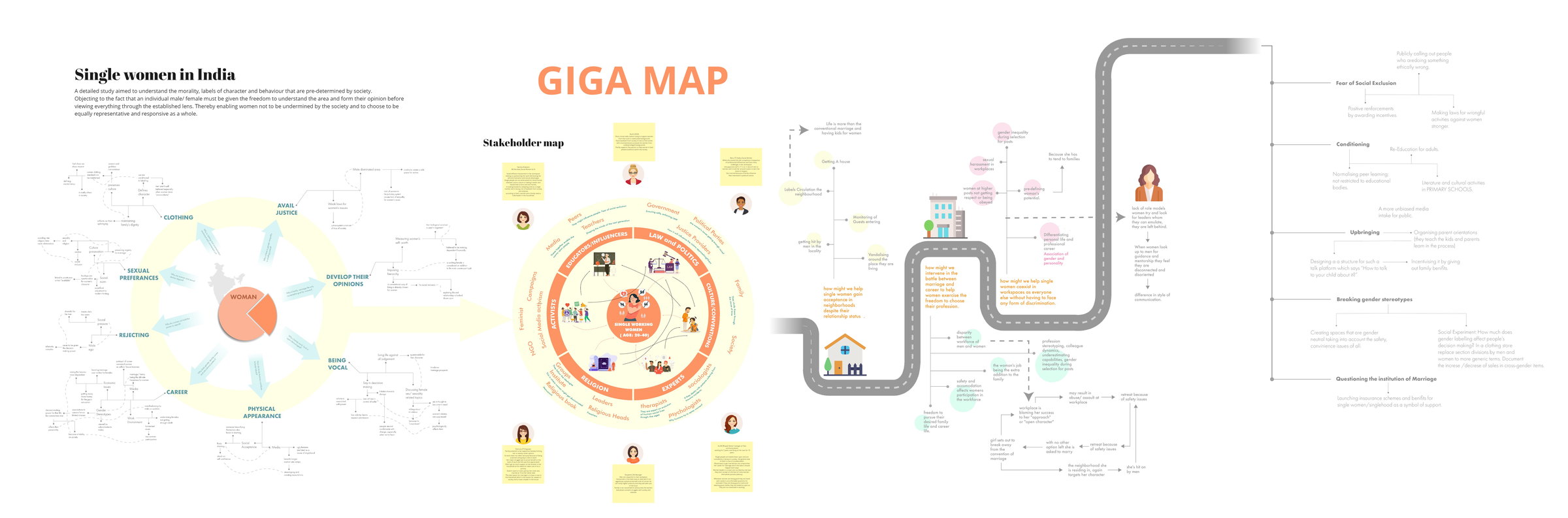
The module was about systems rather than objects: take something nobody can fix with a product, map it until the structure is visible, and only then decide where an intervention could go. We started on civic sense in the broadest sense — why people disregard rules they agree with — and sorted that into branches. One branch was crowd behaviour. One was disregard for law. One was shaming, and that is the one that would not let go.
// What actually happened
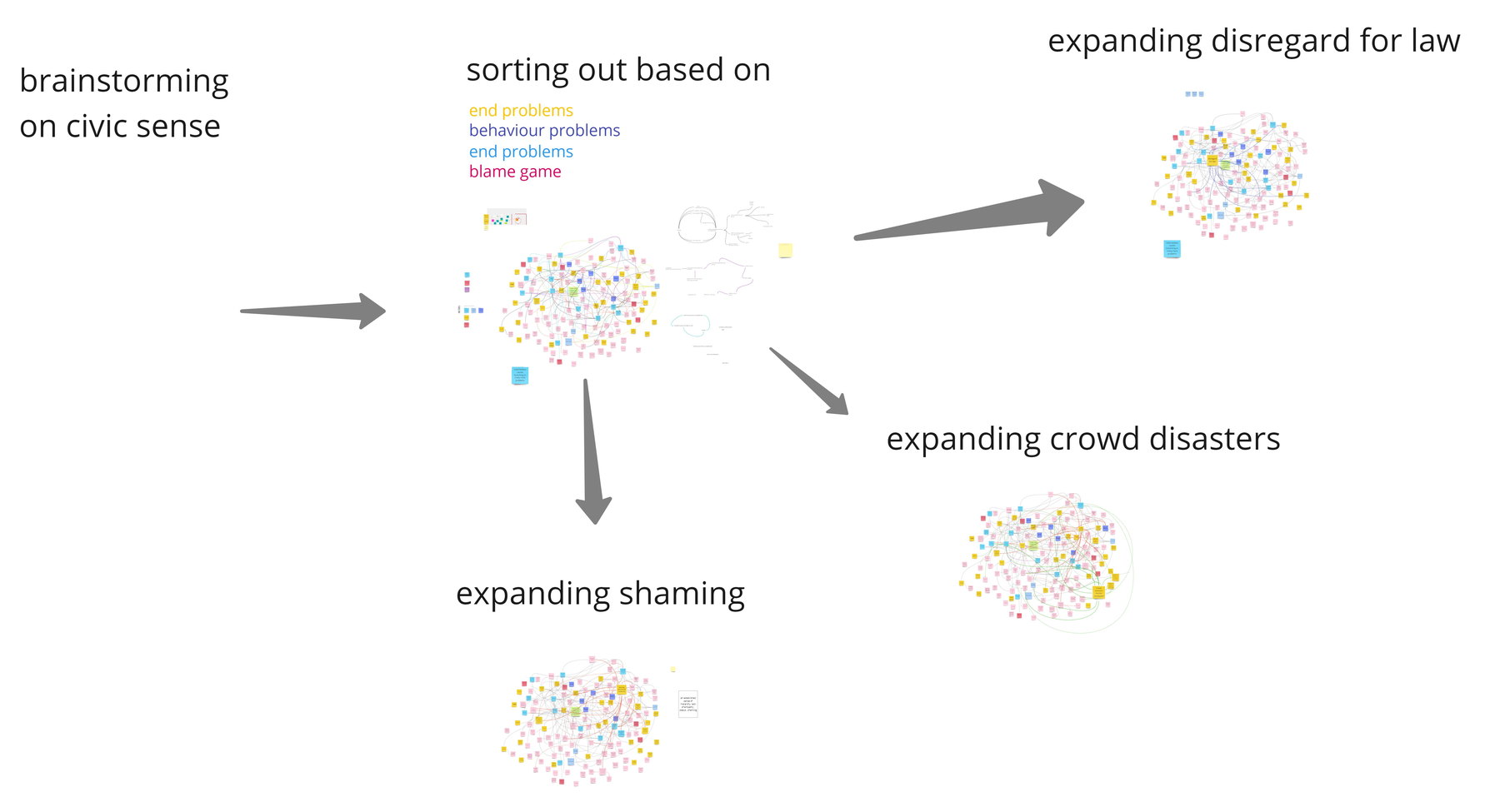
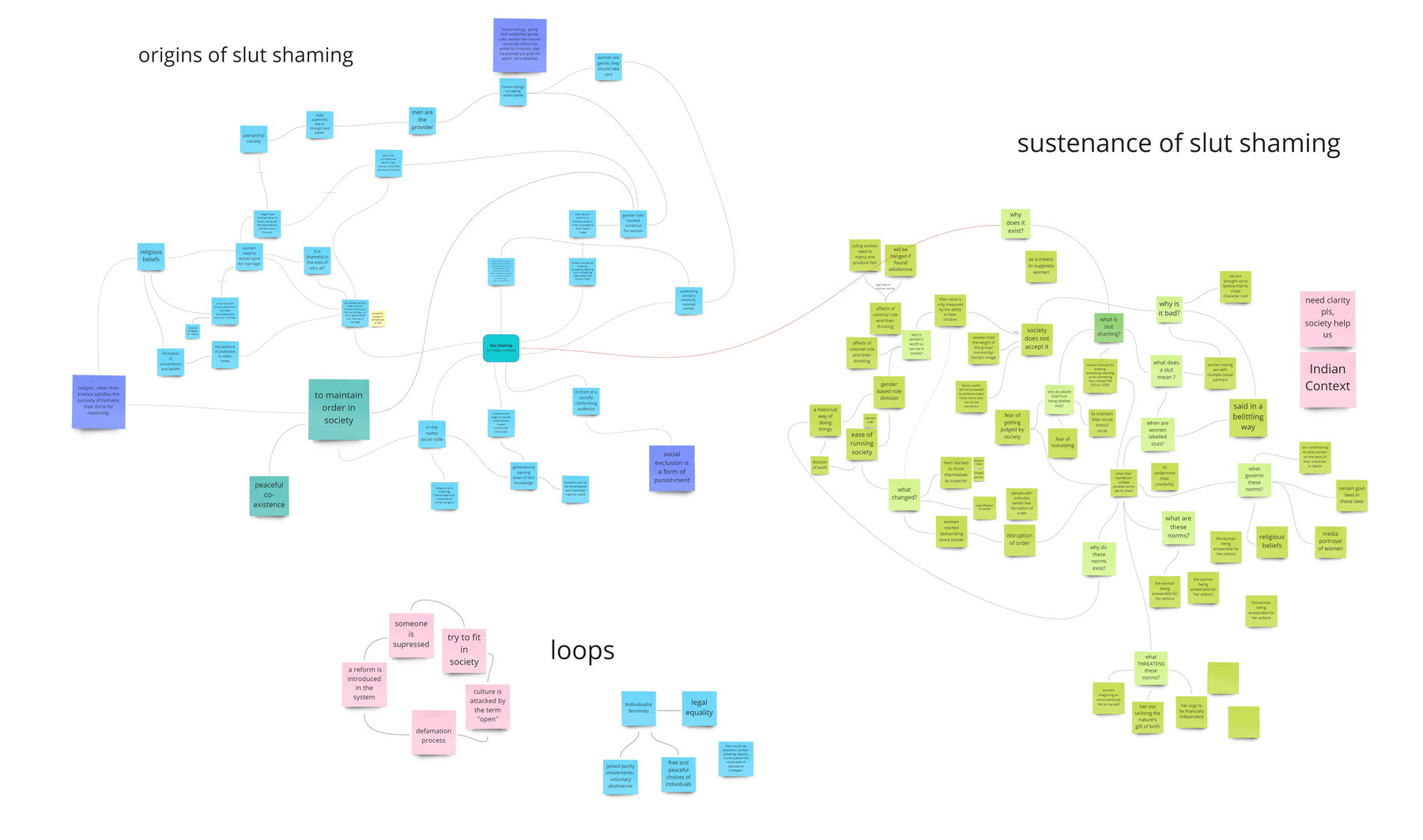
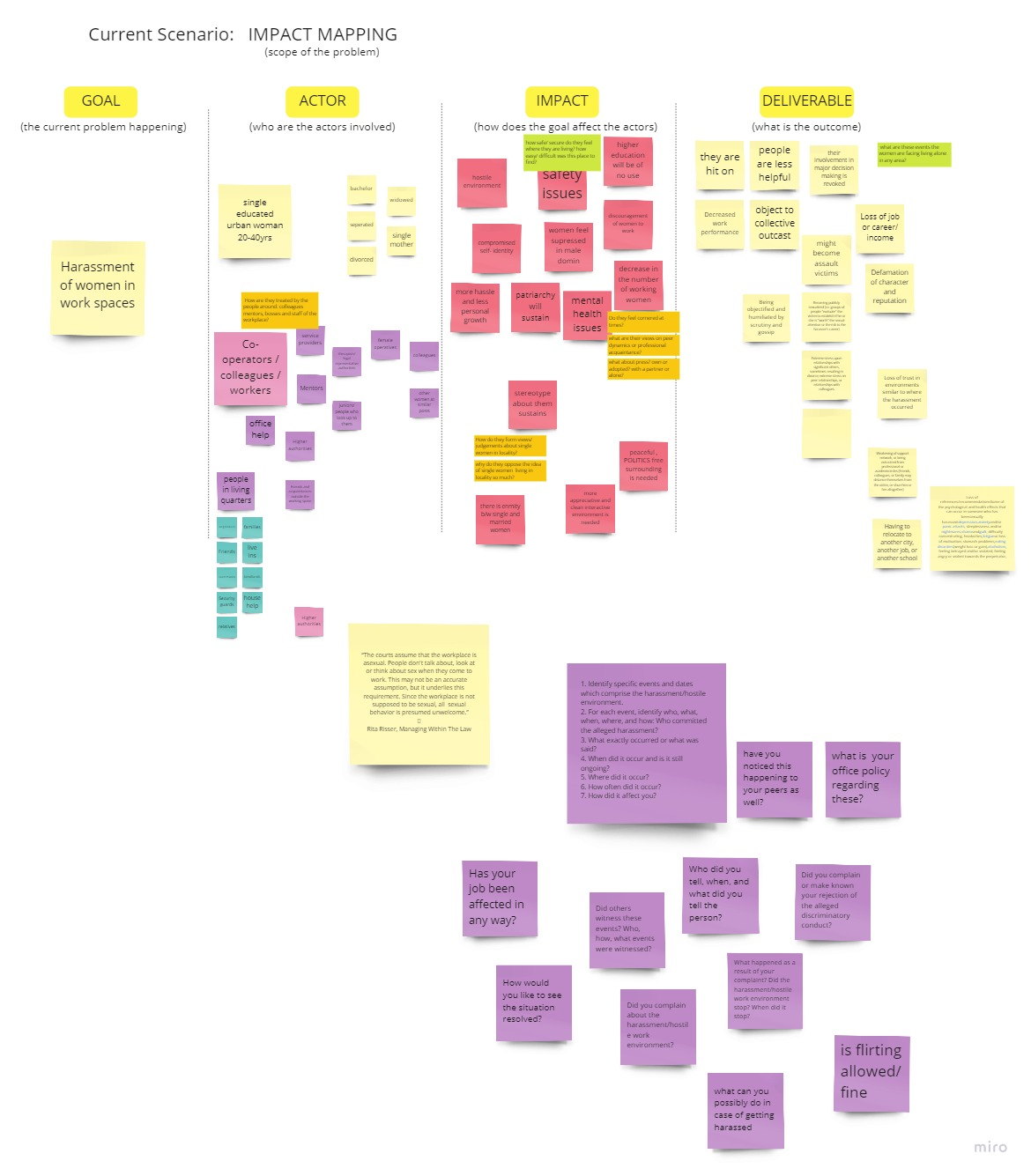
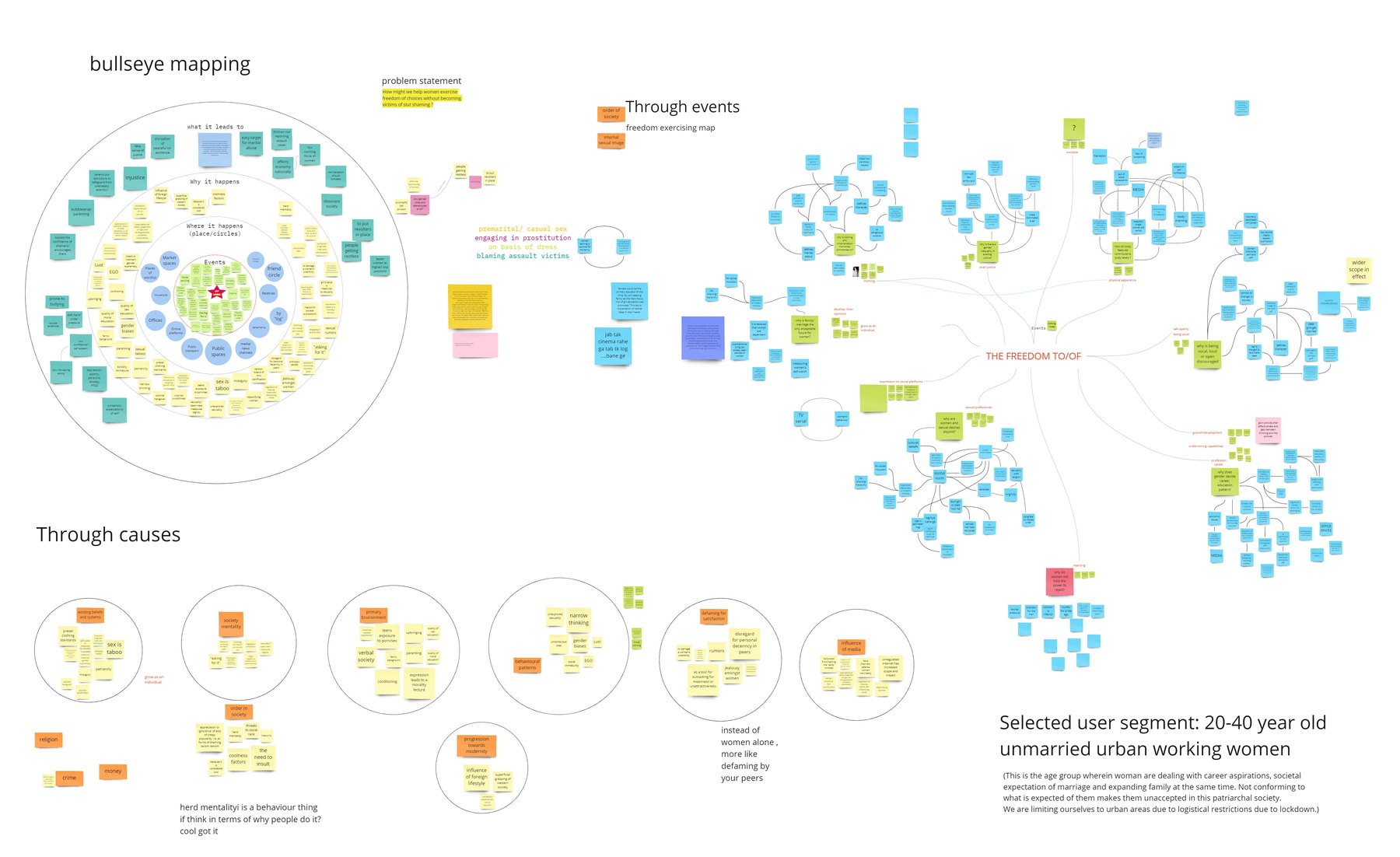
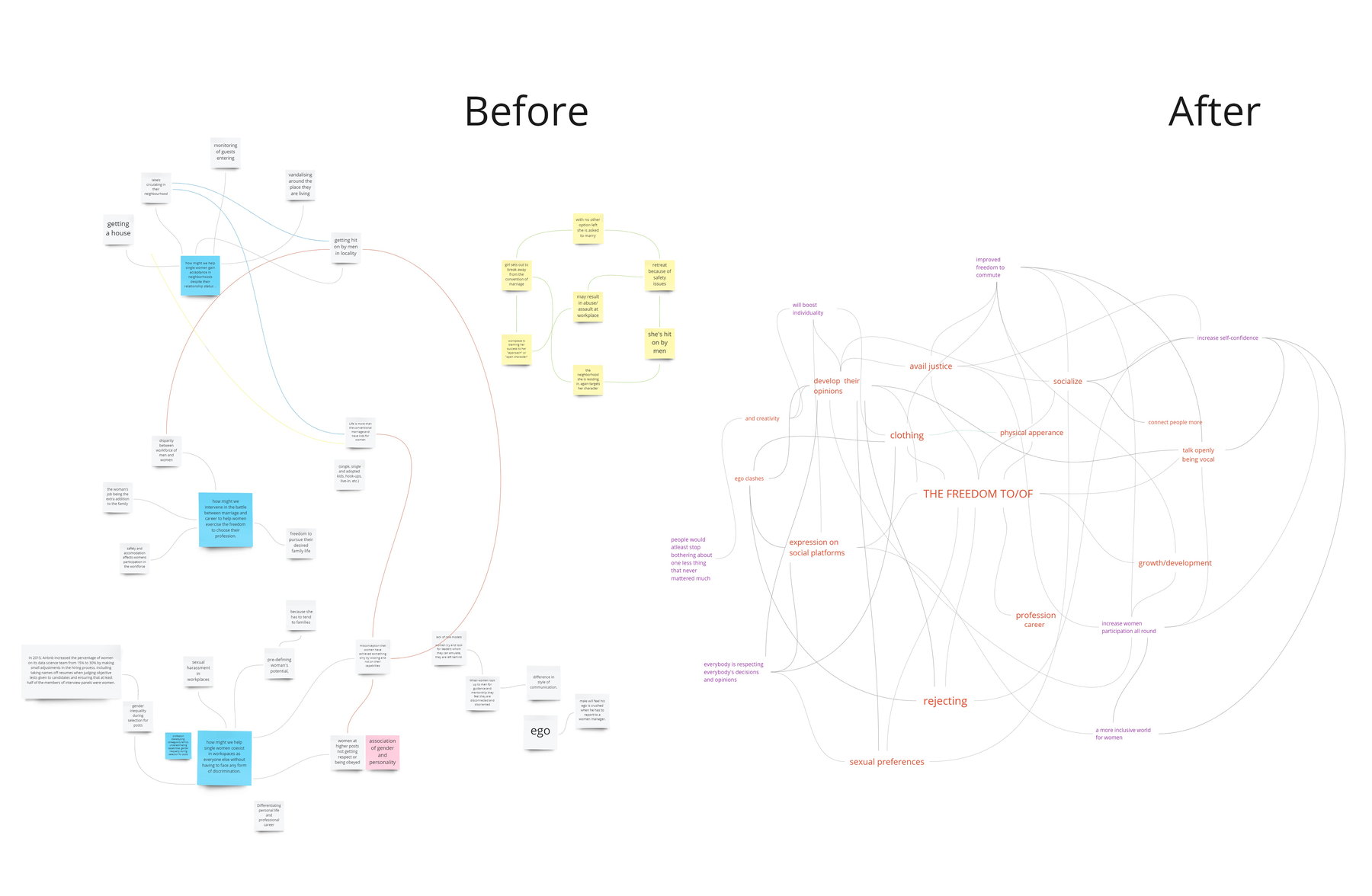
Shaming got its own exploratory map, split between where it comes from and what keeps it alive, with a separate cluster for the loops that feed it back into itself. That map made it obvious the subject was too wide to design against, so it narrowed: from shaming in general, to harassment of women in work spaces, mapped against goal, actor, impact and deliverable, with the interview questions we wanted answered stuck to the bottom of the board. The bullseye and causal maps that followed cut it once more, to a stated user segment — twenty to forty, unmarried, urban, working. Then a gigamap of what that life is actually made of, and a before-and-after system model of where a change could be inserted.
// What was delivered
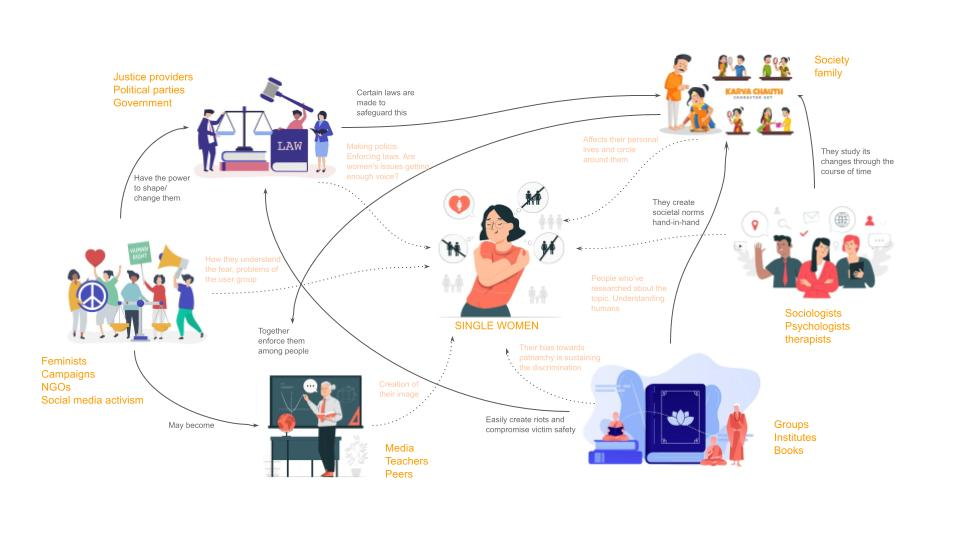
Seven maps carrying the whole argument: a civic-sense brainstorm and its branches, an exploratory map of shaming, an impact map of harassment at work, an information map with the user segment stated on it, an illustrated stakeholder map, a landscape gigamap, and a before-and-after system model.
// What I did
One of a small team — four of us, as I remember it, though nothing in the files records who did what. The maps are the team's work and this page does not split them up.
// What came out of it
A defined segment and a system model, with an intervention the team called The Freedom Touch sitting in the 'after' state. The honest summary is that the mapping is the deliverable: it took a subject that was far too large to act on and reduced it to a population you could actually go and talk to.
// Where it stands now
Coursework. Nothing was built, nothing was tested with the people it describes, and the segment it lands on was defined by students rather than validated with anyone in it.
// What I'd do differently now
- We opened on a subject the size of a society and spent weeks before admitting that nothing designed against it could be specific enough to matter. The narrowing — three maps and a stated segment — was the actual work, and it came late.
- Every map here was made by the team, about a group none of us belonged to, and the segment was defined from research rather than from anyone in it. That is the project's central weakness and it is not fixable by drawing better maps.
- The intervention is a name in a diagram. I can tell you where it was meant to sit in the system and almost nothing about what it would have been to use, which is the usual way a systems project runs out of road.