A research methods module aimed at household waste in Kurukshetra: observation, interviews, focus groups and a survey, planned properly and then only partly carried out.
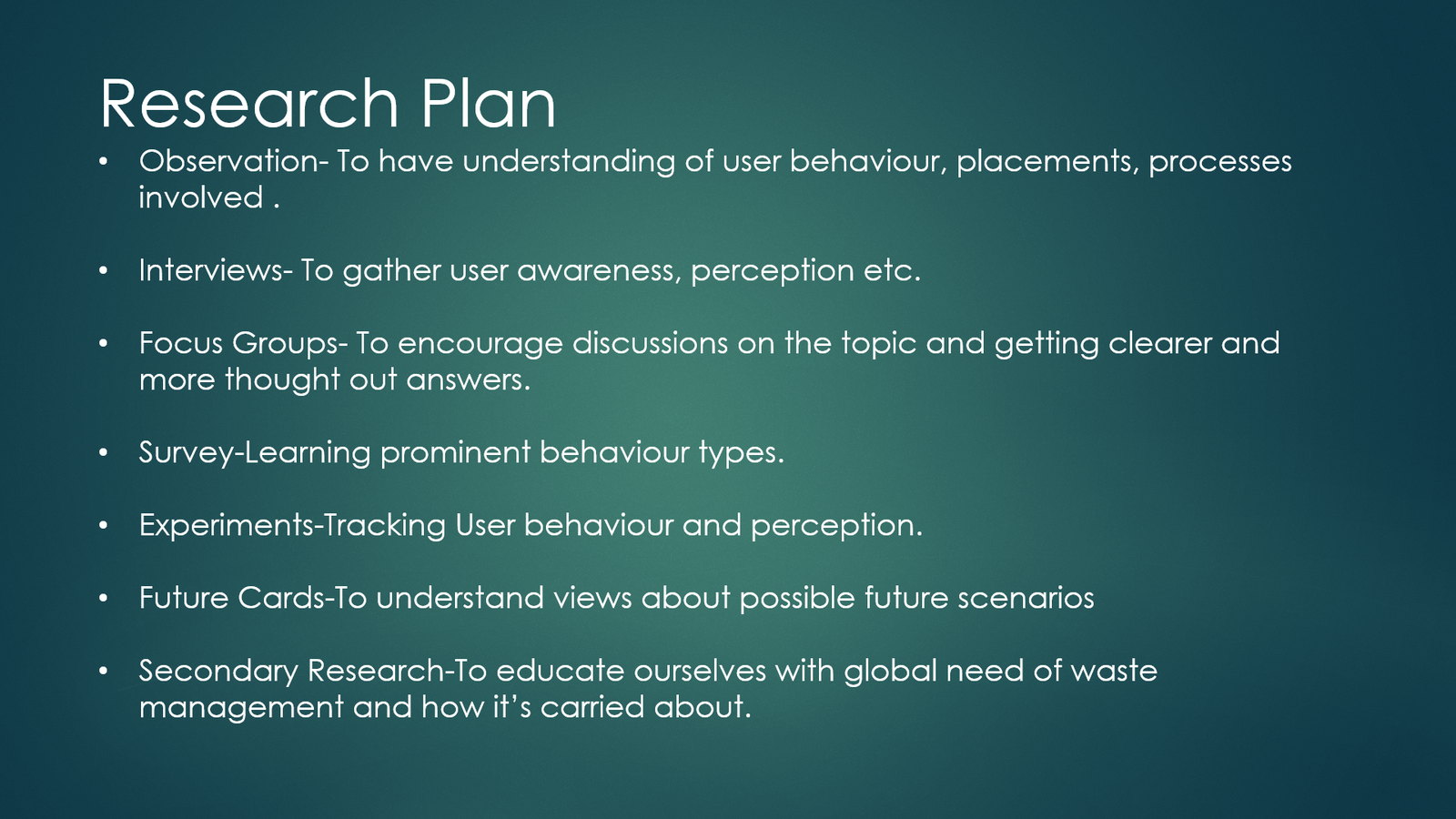
Understand how households in Kurukshetra actually handle waste — not how they say they do — using a stack of methods deliberately chosen to contradict each other: observation to see behaviour, interviews to hear the reasons, focus groups to surface disagreement, a survey to size it, and future cards to test what people would accept.
Why it seemed promising
Waste is the clearest case of a problem where the stated behaviour and the observed behaviour come apart, which is exactly when a mixed-method plan earns its cost. Everyone says they segregate.
What was actually built
A full research plan, an observation protocol, interview and survey instruments, and the field work that followed. No intervention — the module was about the method, not the fix.
Why it stopped or changed direction
It ran out of term. The plan is more complete than the findings, which is the usual shape of a student research project and the thing I would warn anyone about: designing the study is the enjoyable part and it is not the part that produces an answer.
What survived
Observation before interviews, always. Ask first and you get the account people have already rehearsed; watch first and you know which question is worth asking.
Asking Kurukshetra about its own rubbish — Ashish Narayan