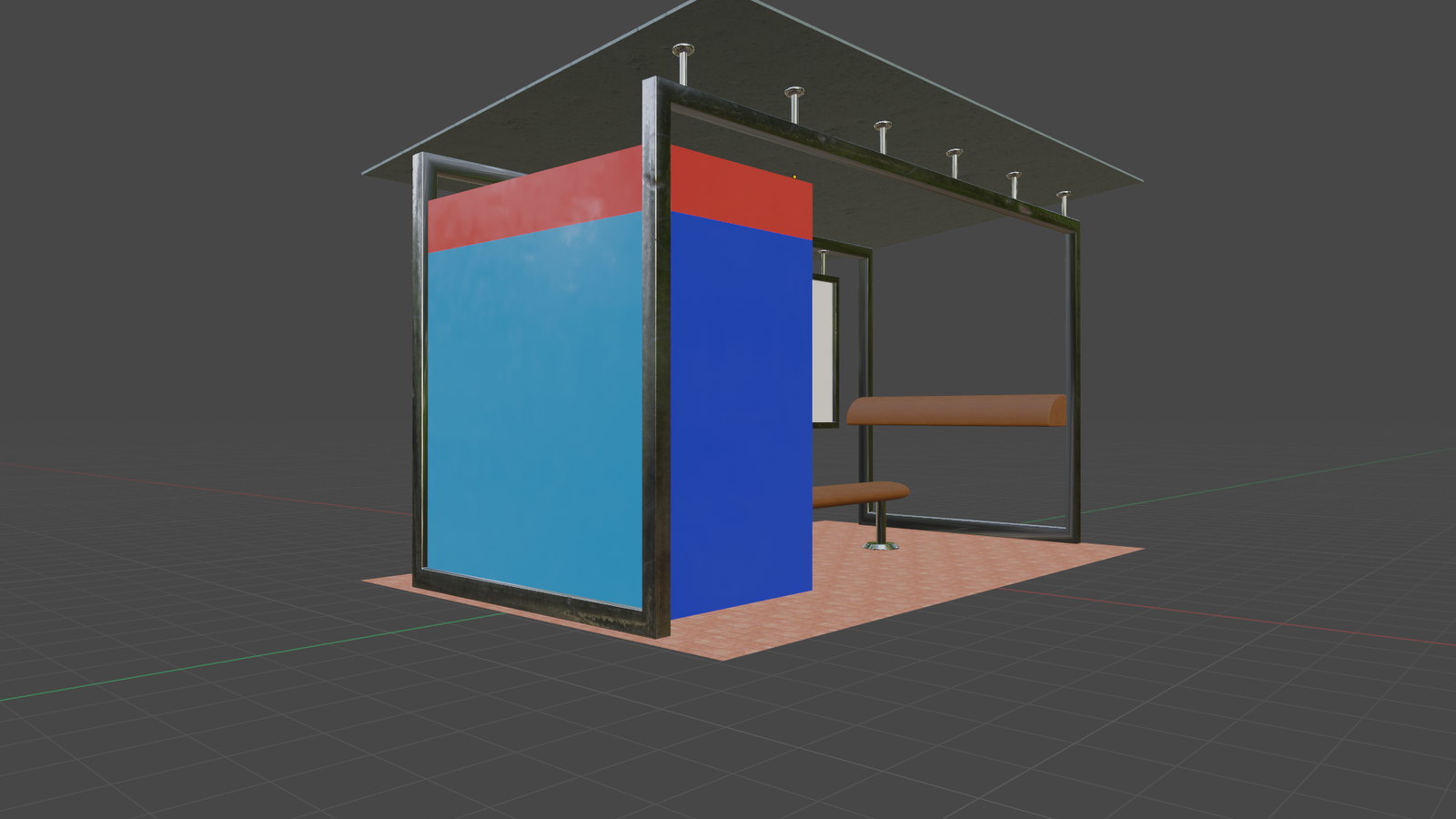
A roadside bus shelter redesigned around the two things the existing ones never provide: somewhere to sit that is not hot, and a surface that tells you which bus you are waiting for.
A standard-pattern bus shelter for a road where the existing one was a slab of concrete and a tin sheet. A light steel frame, a roof deep enough to shade the bench at the hour the sun is worst rather than at noon, an enclosed back panel to cut the dust thrown up by passing traffic, and a flat coloured face big enough to carry route information at a size you can read from the road.
Why it seemed promising
Shelters like this are built in hundreds to one drawing, so a single good decision is multiplied and a single bad one is too. That is an unusually high return on getting the bench height and the roof overhang right, and those are cheap things to get right.
What was actually built
Three rendered views and the frame drawings behind them. Nothing physical.
Why it stopped or changed direction
It was a module, and the module ended. There was never a client, a site or a budget attached to it — which is the honest reason, and also the reason it never had to answer the hard questions about drainage, vandalism or who maintains it.
What survived
The habit of designing for the worst hour rather than the average one. A shelter that works at noon and fails at four in the afternoon is a shelter that fails, and that framing went straight into the library project the same year.