The product lens
A practice that fits on one laptop
No server. No account. No internet.
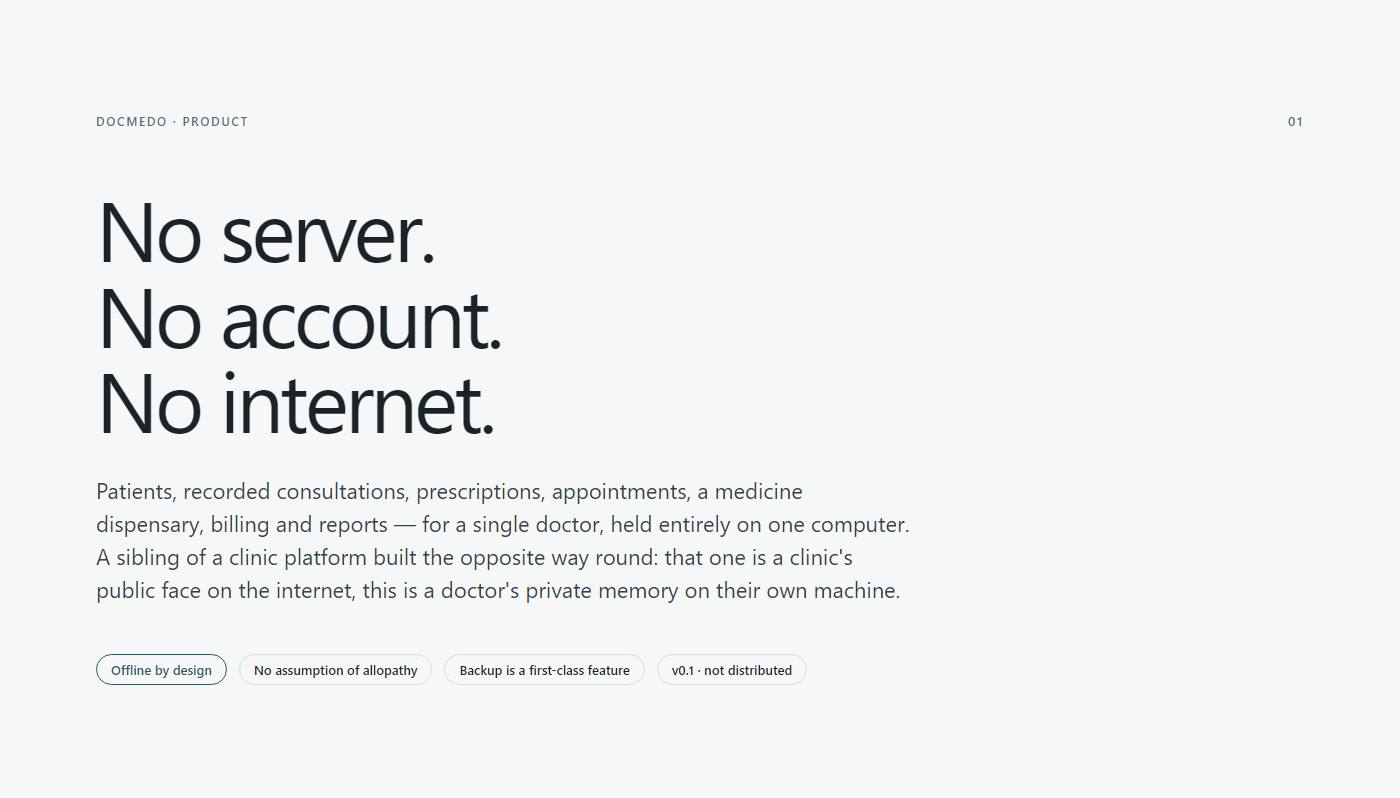
01One doctor, one device, every record — A practice companion designed around the constraint that nothing leaves the machine.Full size ↗ 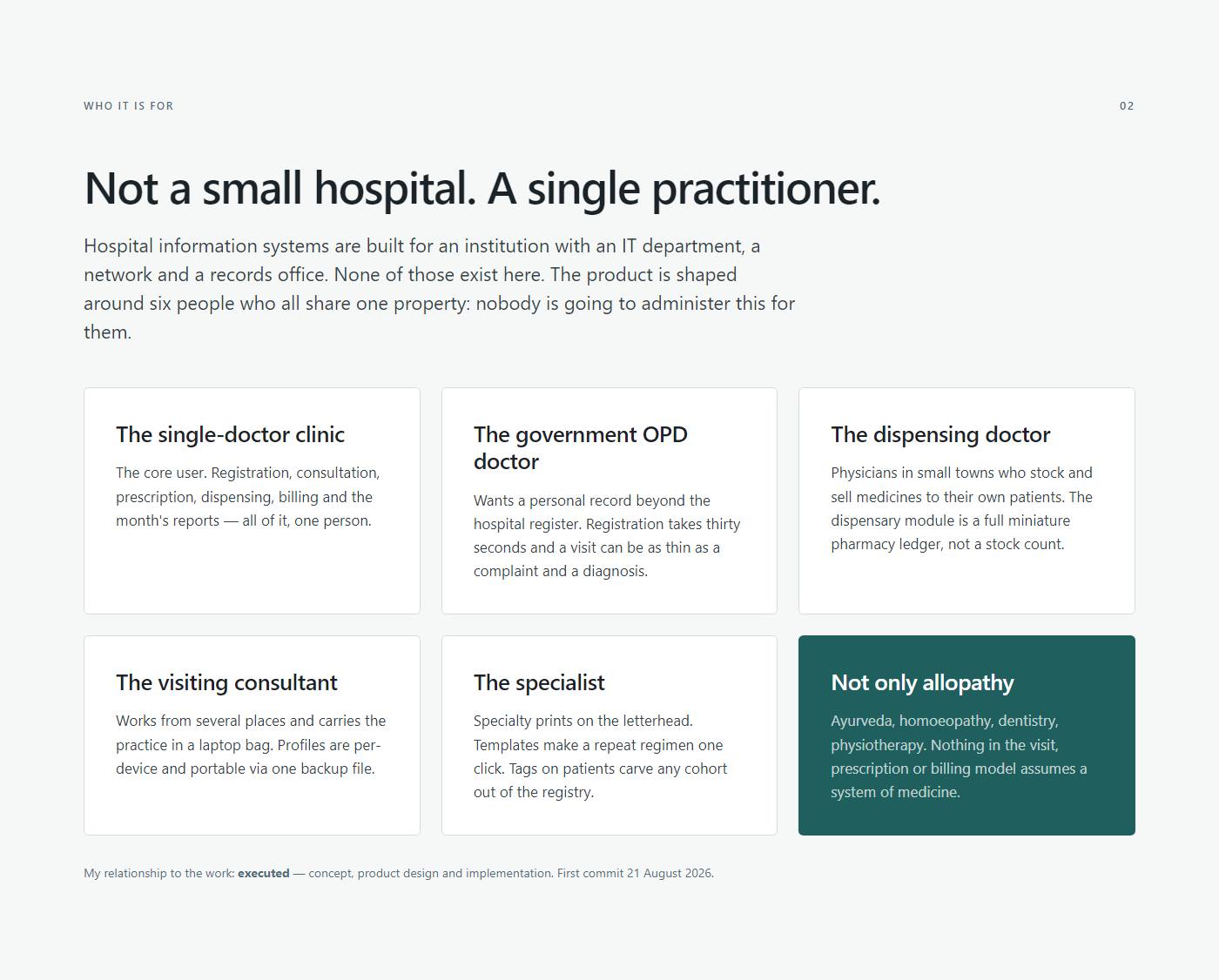
02The doctor hospital software ignores — Six user types, each one a specific person the product is shaped around.Full size ↗ 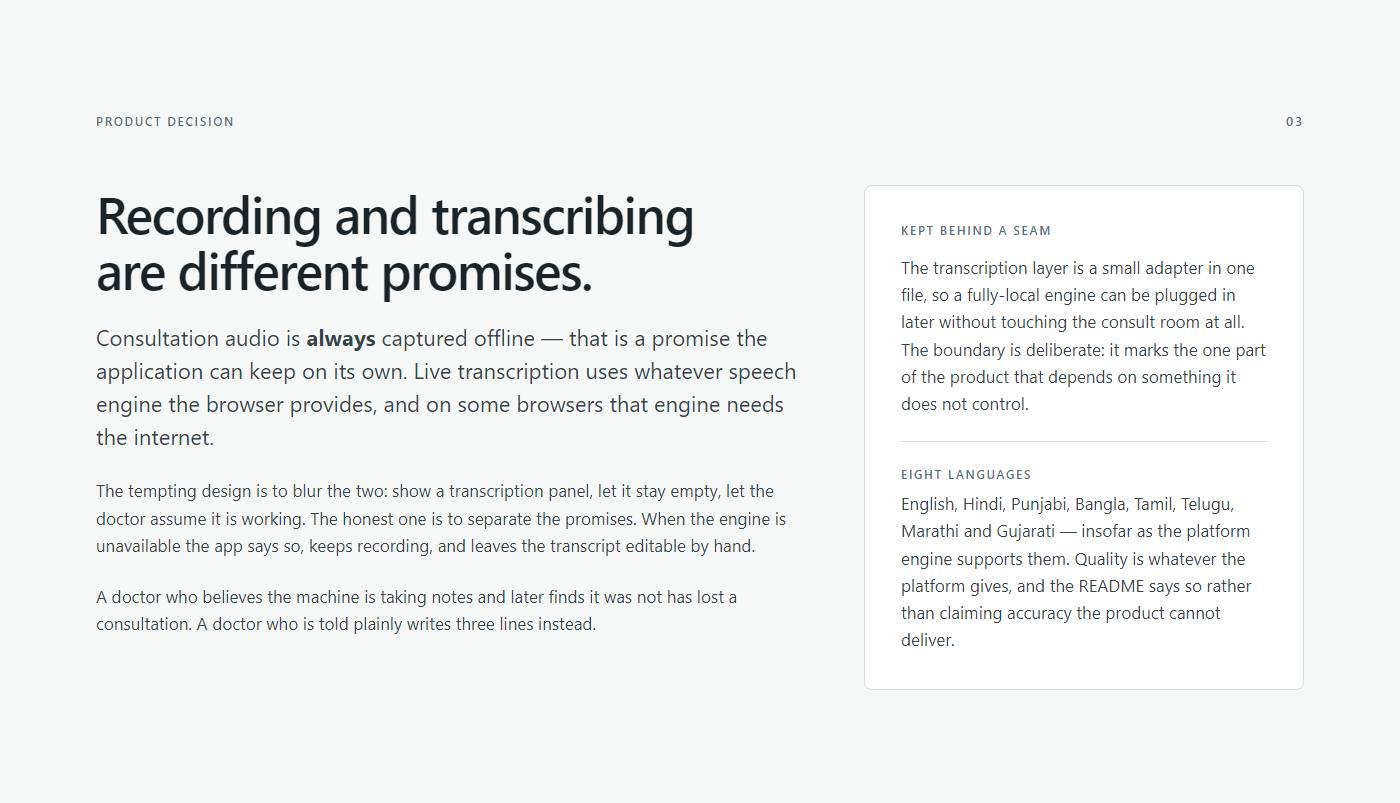
03The feature that says when it cannot work — Audio is always captured. Transcription is not always available, and the app admits it.Full size ↗ 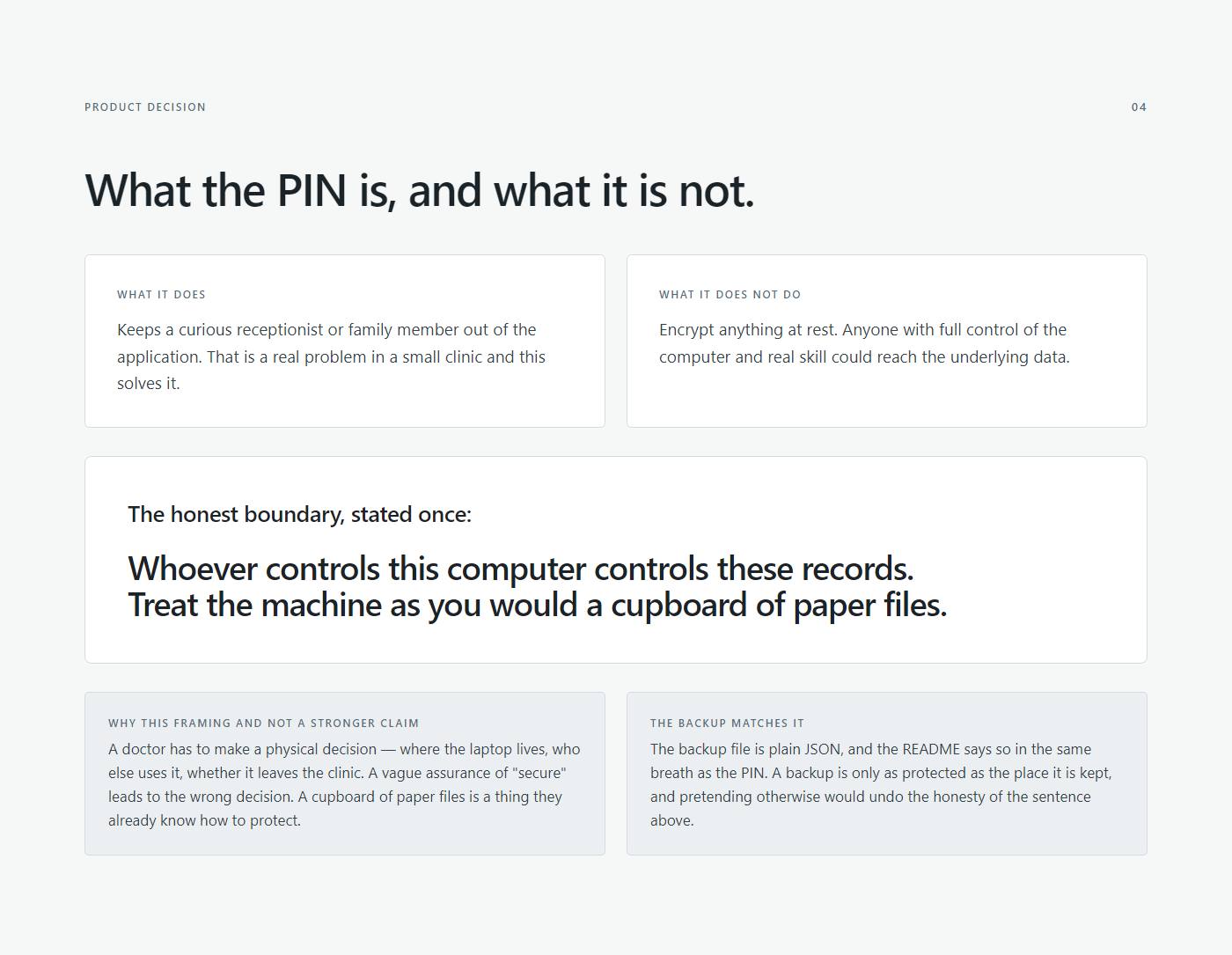
04A latch, not encryption — The security boundary stated in the words a doctor can act on.Full size ↗ 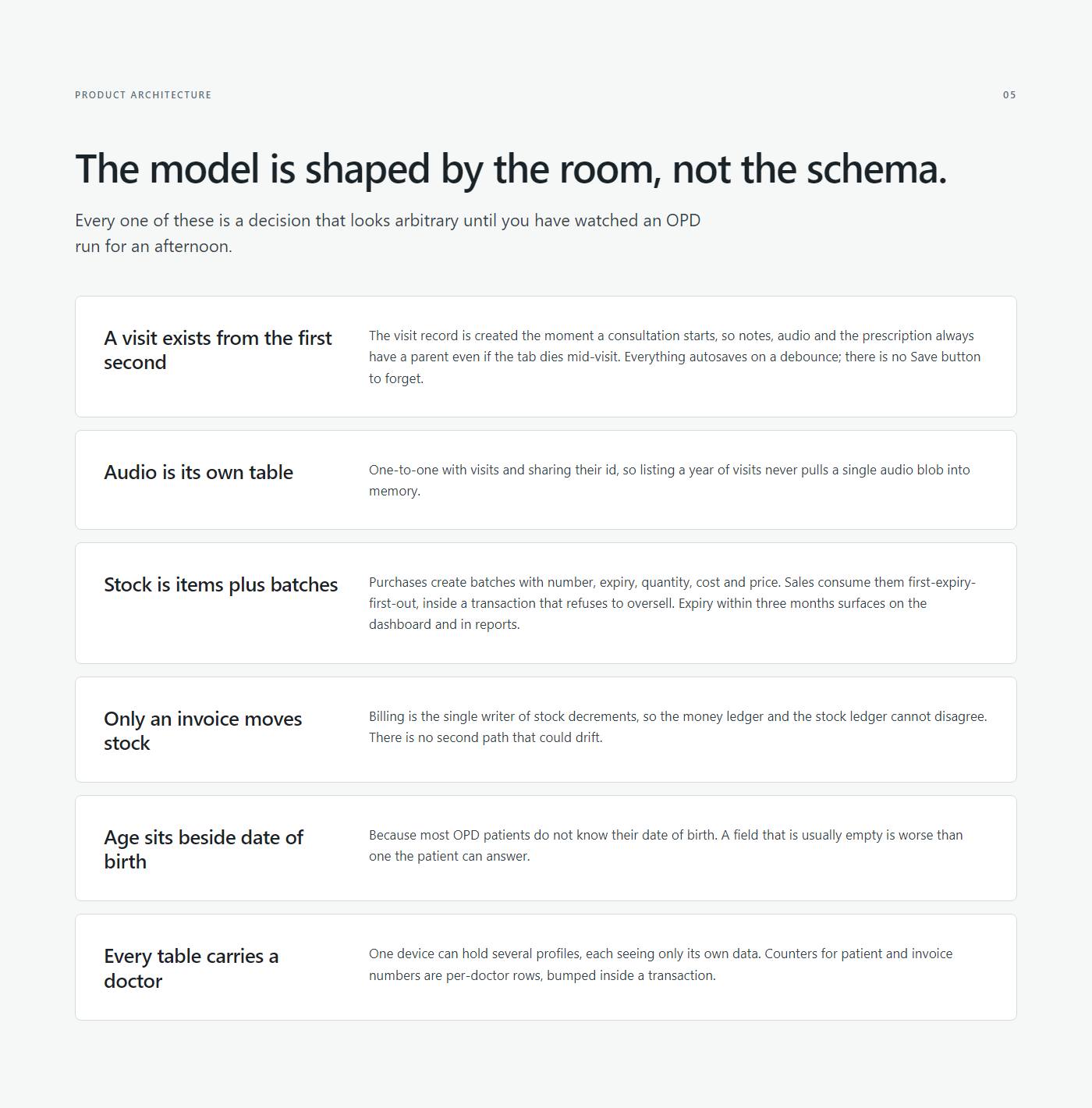
05Six load-bearing decisions in the data model — Each one exists because of something that happens in a real consulting room.Full size ↗ 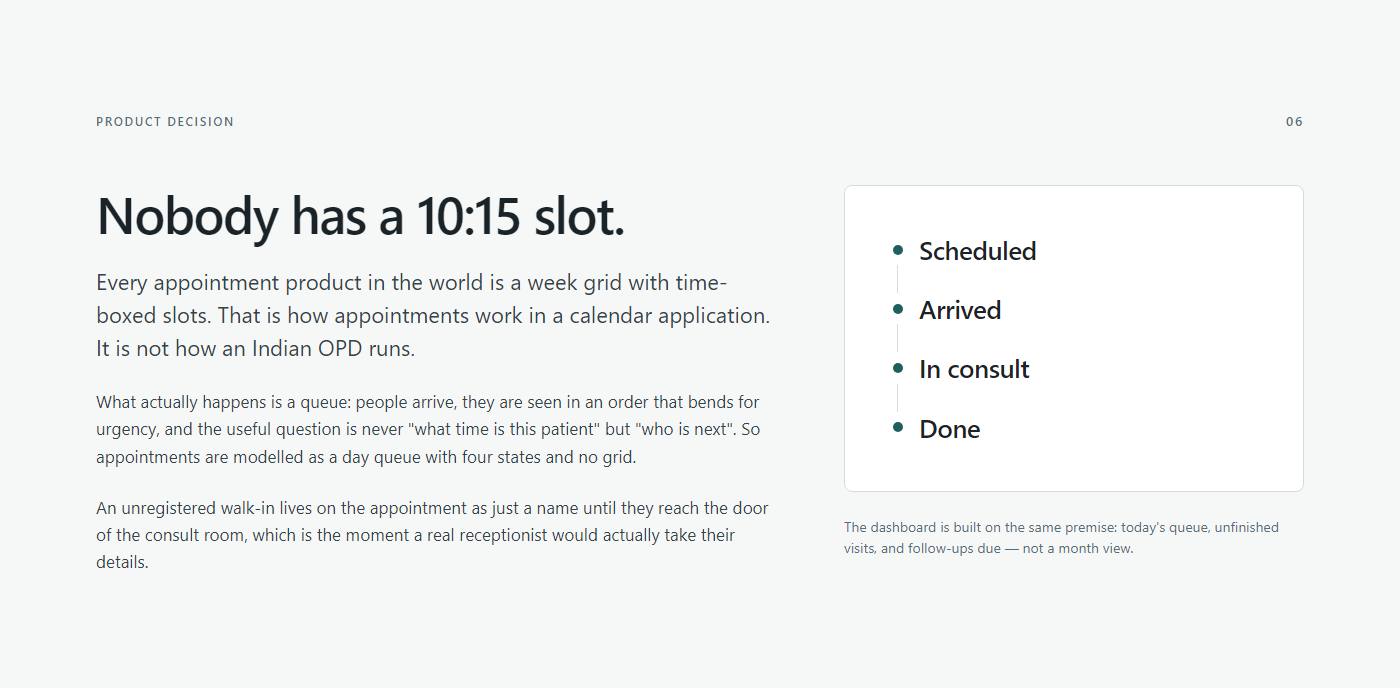
06A day queue, not a calendar grid — The single clearest case of modelling what happens rather than what software usually does.Full size ↗ 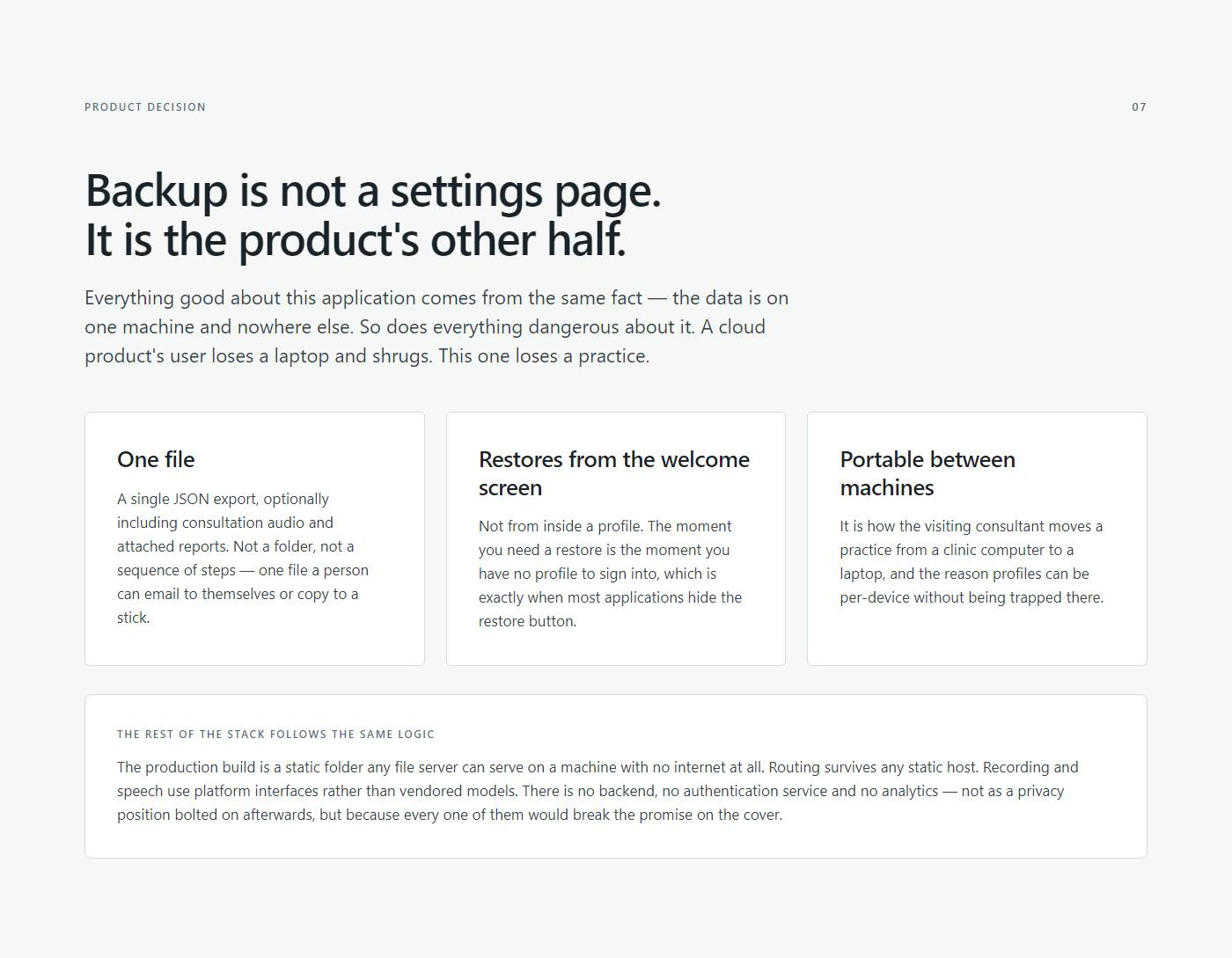
07When the device holds the only copy — Offline is a promise with a consequence, and the consequence is a feature.Full size ↗ 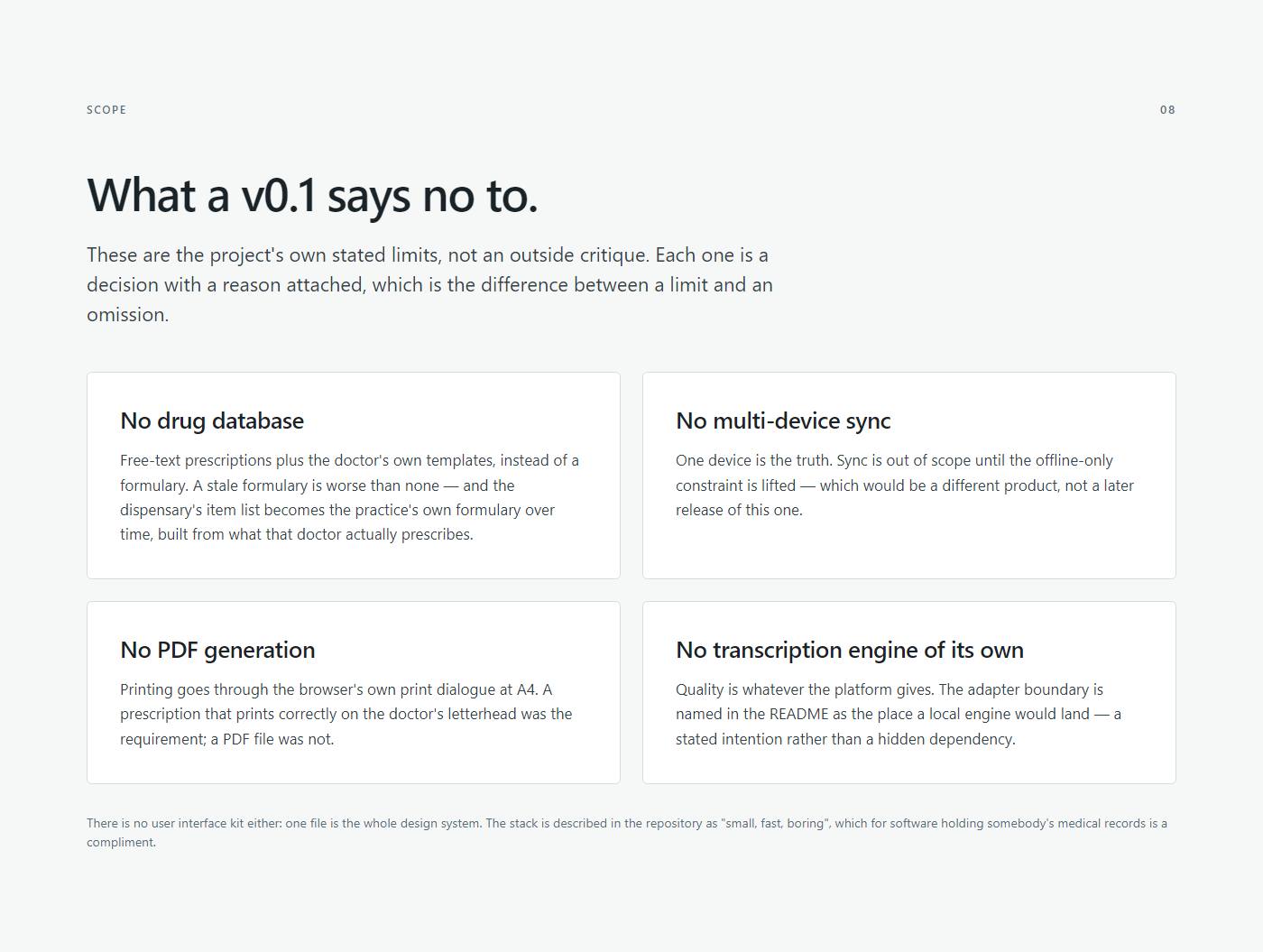
08The features deliberately left out — Four v0.1 limits the project states about itself, each with its reason.Full size ↗ 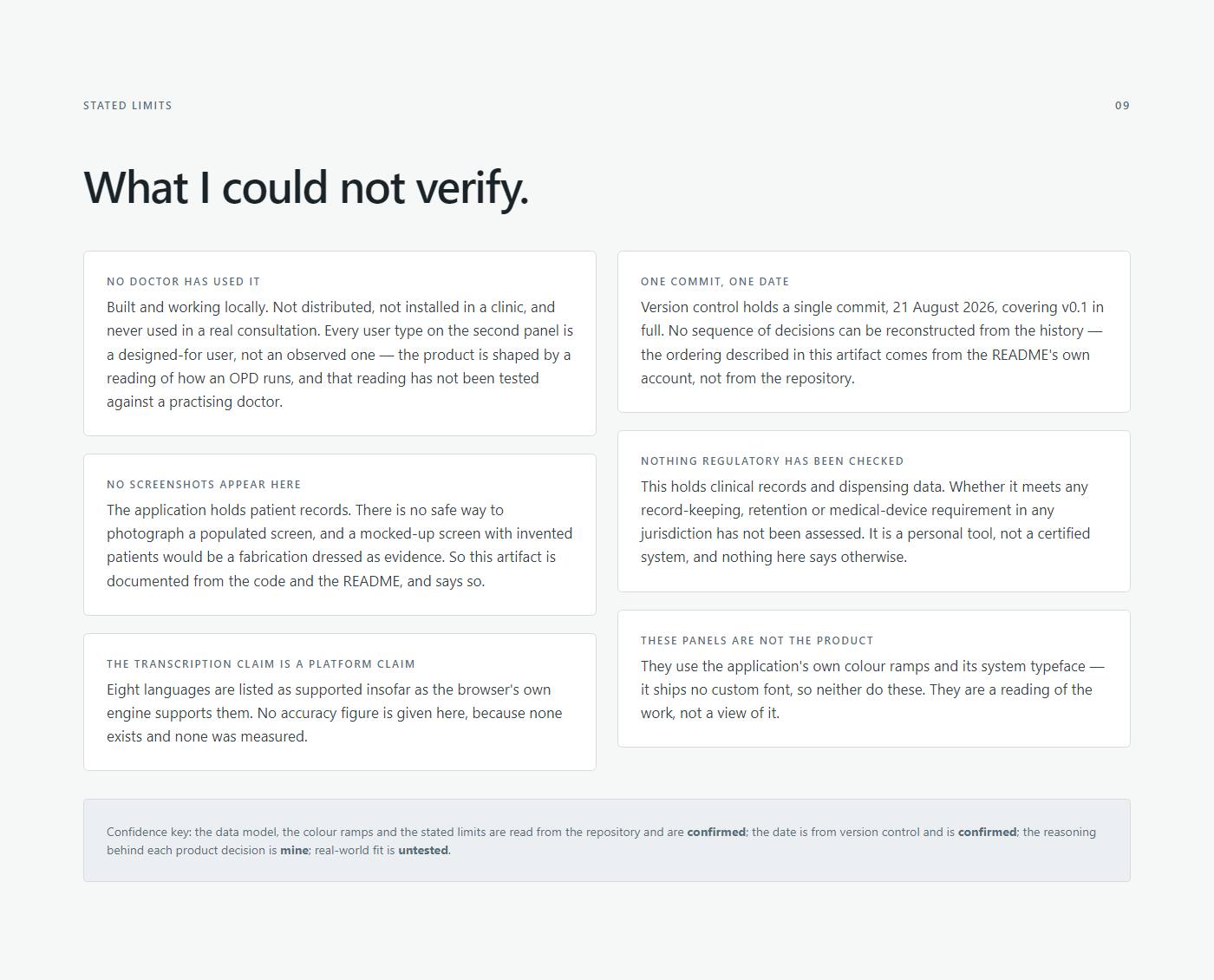
09What this artifact does not establish — The stated-limits section. Every artifact in this set ends with one.Full size ↗